
Hopkins, MN – October 06, 2026 – PRESSADVANTAGE –
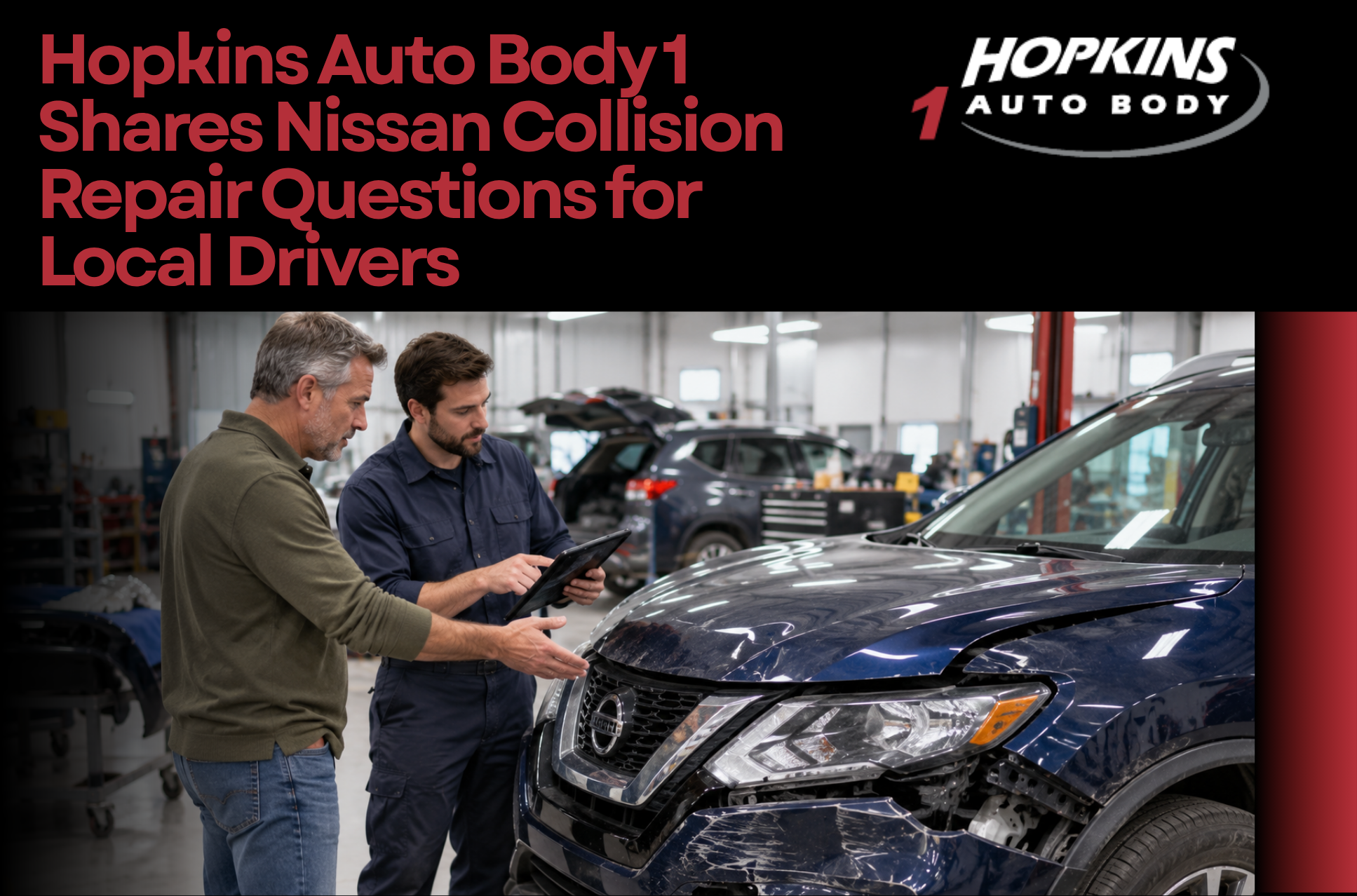
Hopkins Auto Body 1 is publishing consumer guidance designed to help Nissan owners understand the decisions that can shape collision repair after an accident. The September resource organizes the repair process around several practical areas, including damage analysis, Nissan-specific repair information, replacement parts, electronic systems, and repair documentation.
The guidance is intended to give Nissan owners a clearer framework for following a repair without suggesting that every Nissan requires the same procedures. Model year, vehicle configuration, affected components, and documented collision damage can influence the repair plan.
Hopkins Auto Body 1 operates as part of Collision Center 1 and serves as its local Hopkins repair facility. Information about the shop and its services is available through the Hopkins Auto Body 1 location page.
One of the first considerations after a collision is determining the complete scope of damage. An initial inspection can document visible conditions and identify affected exterior components, but some areas may remain concealed until damaged parts are removed.
Disassembly can provide access to brackets, reinforcements, mounting points, adjoining panels, structural areas, wiring, and other components behind the exterior surface. If additional collision-related damage is documented at that stage, the original repair plan may need to be updated.
Nissan repair information provides another important part of the process. Procedures can differ among models and model years, so technicians cannot assume that a repair method used on one Nissan automatically applies to another. Manufacturer repair information can address areas such as component replacement, attachment methods, materials, structural repairs, corrosion protection, refinishing, and electronic systems.
For owners, the practical takeaway is that repair decisions should reflect the specific Nissan being repaired and the documented damage rather than a generic process based only on the vehicle brand.
Replacement parts are another area consumers may see reflected in the repair plan. Different types of components may be considered depending on the part involved, repair requirements, availability, and other circumstances associated with the job. Parts availability can also influence scheduling, particularly when a specific component requires additional sourcing time.
Modern Nissan vehicles can add electronic considerations to collision repair. Depending on the model and equipment, cameras, radar units, sensors, wiring, and related components may be located around bumpers, grilles, windshields, mirrors, and other collision-prone areas.
The condition of these systems cannot always be determined from exterior appearance alone. When the affected area contains driver-assistance technology, technicians can use applicable Nissan repair information to determine whether diagnostic scanning, calibration, inspection, or another procedure applies.
The broader collision repair process available through Collision Center 1 incorporates these technology-related considerations with the physical repair of the vehicle.
Structural damage can require similar vehicle-specific evaluation. An impact may affect components beyond the most visible point of contact, while significant-looking exterior damage does not automatically establish that major structural components are involved.
When structural areas are affected, technicians can evaluate the condition of the components, attachment points, dimensions, and applicable repair procedures before determining the appropriate repair approach.
The decision to repair or replace a component follows the same principle. Visible damage alone does not automatically determine the outcome. Material, damage severity, location, accessibility, component condition, and applicable manufacturer information can influence whether a part is repaired or replaced.
Some repair operations also involve work that customers may not see once the vehicle is completed. Panel removal, welding, grinding, or surface preparation can disturb coatings, seam protection, or other protective materials. When applicable, those materials can be addressed during the repair before affected areas become concealed during reassembly.
Refinishing follows the physical restoration of damaged body surfaces. Paint information provides a starting point for identifying the vehicle’s finish, while the existing paint can also be evaluated during the matching process. Depending on the repair and finish, blending may be used to create a gradual visual transition between newly refinished and surrounding areas.
These stages are part of the auto body repair process rather than isolated procedures. Damage analysis determines what was affected, repair research identifies applicable procedures, body work addresses physical damage, refinishing restores affected exterior surfaces, and reassembly returns removed components to the vehicle.
Documentation can help Nissan owners follow that sequence. Updated estimates, parts information, repair records, and applicable diagnostic or calibration documentation can provide context when the scope of work changes or when important operations occur behind finished surfaces.
The September resource brings these considerations together into a simpler consumer framework. Nissan owners can focus on understanding what damage was identified, which manufacturer procedures apply, what components are being repaired or replaced, whether technology-related procedures are involved, and how changes to the repair plan are documented.
The central takeaway is that Nissan collision repair is not defined by one universal procedure. The repair plan develops from the specific vehicle and its documented damage, with Nissan repair information helping guide applicable operations throughout the process.
Hopkins Auto Body 1 is located at 10889 Excelsior Blvd, Hopkins, MN 55343. The facility operates as part of Collision Center 1 and provides auto body and collision repair services for Hopkins-area drivers.
###
For more information about Hopkins Auto Body 1, contact the company here:
Hopkins Auto Body 1
Jerald Stiele
(952) 935-7556
kburke@collisioncenter1.com
10889 Excelsior Blvd, Hopkins, MN 55343


