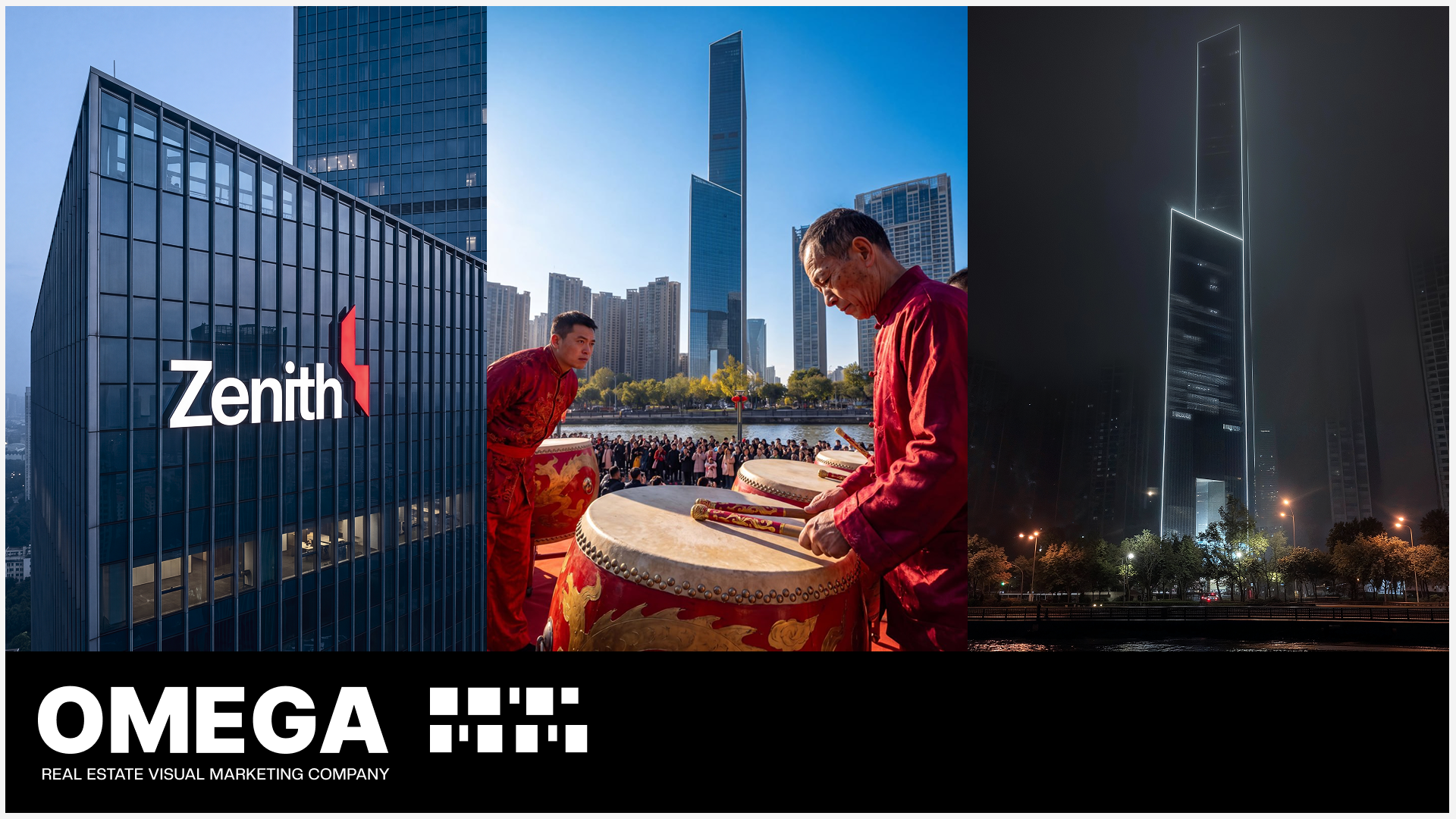
From renderings to full marketing systems: how Omegarender and other CGI studios are reshaping the way real estate projects launch and sell.
NEW YORK, NY, UNITED STATES, August 21, 2026 /EINPresswire.com/ — Architectural visualization used to come last. A developer would lock in the concept, finalize the architecture, and set the commercial strategy — only then would a studio be brought in to produce the renderings buyers and investors would eventually see.
That order is breaking down. Across the U.S. and Australian real estate markets, CGI studios are increasingly stepping into a role once reserved for marketing agencies: shaping both how a project looks and how it’s positioned, sold, and remembered.
The shift from images to strategy
The reason is simple: a rendering rarely lives alone anymore. The same image might show up on a project website, in an investor deck, across paid social, inside a virtual showroom, and on a broker’s sales floor. If those touchpoints don’t share a clear idea, the project reads as fragmented, no matter how polished any single image looks.
That’s pushed CGI studios to get involved earlier and think more broadly. Instead of simply illustrating a finished concept, many are now helping developers answer the questions that come before the first image is even sketched: What should a buyer understand in the first three seconds? Which audience is this actually for? What sets this development apart in a crowded market?
For developers, those questions were always tied to marketing and sales performance. What’s new is that CGI studios are now being brought into that conversation directly, helping shape the brief from the outset.
Why photorealism alone doesn’t close deals anymore
Real estate marketing has gotten harder to pull off cleanly. A single premium residential or mixed-use project might need to speak to buyers, institutional investors, hotel operators, brokers, and local stakeholders — all at once, all with different priorities, but all through materials that still need to feel like one project.
A folder of beautifully rendered images can show off the architecture. It won’t necessarily explain why the project matters, or give a sales team what they need to close. That gap is where developers increasingly need more: positioning, naming, a brand story, sales collateral, and digital tools developed as a cohesive, integrated whole.
CGI studios are well-positioned to fill it. They’re already embedded in the process at the point where a project’s image and market perception take shape. That proximity is turning some studios into strategic partners on top of production partners — without giving up the visualization work that got them in the room in the first place.
Inside the model: a broader, modular toolkit
OMEGA’s expansion wraps a wider system around CGI production. The studio’s current offering spans several connected layers:
• project intelligence and market analysis;
• positioning and audience definition;
• property naming and branding;
• visual language and creative direction;
• architectural visualization and animation;
• sales decks, investor presentations, and fact sheets;
• property websites, landing pages, and interactive tools;
• social content, advertising, and launch campaigns.
None of it is sold as a fixed bundle. A developer might come in needing a brand concept, core renderings, and a sales deck. Another might need positioning work, an investor presentation, and a short-form video package. The mix changes; the goal doesn’t — every asset has to reinforce the same value proposition, regardless of format or channel.
According to OMEGA, this direction wasn’t planned from the top down — it grew out of client conversations. Developers, hotel operators, and real estate marketing teams kept showing up with more than a request for images; they came with unresolved questions about story, audience, and how the sales materials should actually be structured.
A direct response to how real estate now sells
For most buyers and investors, the first real impression of a project happens online, long before a site visit — through a website, a video, a paid ad, a broker’s deck, or a virtual walkthrough. In that environment, a rendering isn’t just an asset anymore. It’s doing communication work: building trust, explaining value, and creating the emotional pull that gets someone to the next step.
That’s especially true for developments competing for attention nationally or targeting premium buyers, where the visual presentation carries more of the sales conversation than it used to. As a result, the line between architectural visualization, branding, and marketing is getting harder to draw. CGI studios aren’t trying to become marketing agencies outright, but some are clearly taking on more of that agency’s job.
Beyond beautiful images
OMEGA still produces the photorealistic architectural imagery it built its reputation on. What’s changed is the frontier around it: not just making a building look good, but explaining why it matters, who it’s for, and how every touchpoint — from the first rendering to the final sales deck — supports the same market position.
OMEGA’s evolution is one example of a broader move happening across the industry, as visualization studios shift from producing isolated images to shaping the full visual and marketing logic behind a real estate launch — by building a larger system of branding, storytelling, sales, and digital experience around it.
Oleksandr Melnyk
OMEGA
email us here
Visit us on social media:
LinkedIn
Instagram
Legal Disclaimer:
EIN Presswire provides this news content “as is” without warranty of any kind. We do not accept any responsibility or liability
for the accuracy, content, images, videos, licenses, completeness, legality, or reliability of the information contained in this
article. If you have any complaints or copyright issues related to this article, kindly contact the author above.

Media gallery