CO, UNITED STATES, August 9, 2026 /EINPresswire.com/ — How Luggage Accessories Manufacturers Help Brands Reduce OEM Costs: A Complete Guide to Supply Chain Optimization
Luggage accessories manufacturers reduce OEM costs primarily through vertical integration, in-house tooling, automated production, and consolidated logistics — eliminating the layered markups and delays that occur when brands rely on multiple subcontracted suppliers. For travel goods brands sourcing telescopic handles, wheels, and hard-shell components, working with a manufacturer that controls mold development, injection molding, aluminum extrusion, and quality testing under one roof typically cuts unit costs by 10–20% and shortens lead times by half compared to fragmented supply chains, according to industry sourcing benchmarks commonly cited by procurement analysts covering the luggage and travel goods sector.
This guide explains how the OEM/ODM luggage parts supply chain works, what drives cost inefficiencies, and how brands can evaluate manufacturers to secure both price stability and product reliability.
Industry Overview: Understanding the Luggage Accessories Manufacturing Sector
The global luggage and travel goods market was valued at approximately USD 27.5 billion in 2023, according to industry market research aggregators tracking travel goods categories, with hard-shell luggage and component-driven designs (telescopic handles, spinner wheels, corner protectors) representing one of the fastest-growing segments due to airline baggage handling demands and consumer preference for durability.
Within this ecosystem, “luggage accessories manufacturers” refers to specialized industrial suppliers that produce the mechanical and structural components used by luggage brands — rather than finished suitcases themselves. Key component categories include:
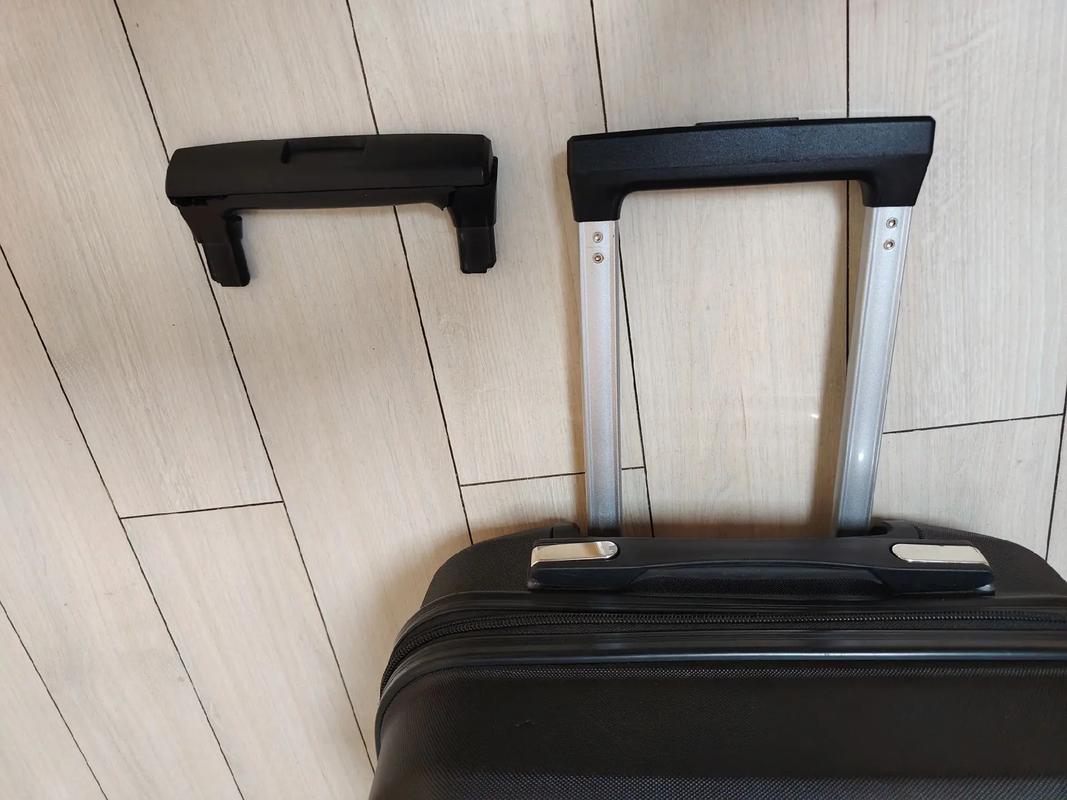
Telescopic/trolley handles — the extendable pull mechanism, often the most failure-prone part of a suitcase
Wheels and wheel housings — spinner (360°) or two-wheel systems
Locks, zippers, and corner guards
Hard-shell panels made from ABS, PC, PP, or aluminum alloy
Brands such as Samsonite, DELSEY PARIS, American Tourister, Antler, and Xiaomi typically do not manufacture these components internally. Instead, they rely on OEM (Original Equipment Manufacturer) and ODM (Original Design Manufacturer) partners who design, mold, test, and mass-produce parts to brand specifications — a structural relationship that directly determines the brand’s OEM cost base.
Why OEM Costs Escalate: The Root Causes
Procurement teams in the travel goods industry consistently report three cost inflation points when sourcing luggage components:
1. Fragmented Supply Chains
When mold-making, injection molding, aluminum processing, and assembly are outsourced to different factories, each stage adds a margin, a transport cost, and a scheduling delay. A brand may unknowingly pay four separate profit margins before a single handle reaches assembly.
2. Low Yield Rates and Rework
Industry-wide defect rates for injection-molded plastic components average 3–8% without stringent QC protocols. Every rejected batch means re-tooling costs, expedited freight, and missed retail deadlines — all of which are absorbed into the brand’s landed cost.
3. Long, Unpredictable Lead Times
Standard lead times for custom luggage components in the broader market range from 30–45 days. Extended lead times force brands to over-order inventory as a buffer, tying up working capital that could otherwise reduce per-unit cost through leaner ordering cycles.
How Vertically Integrated Manufacturers Lower OEM Costs
Manufacturers that control the entire production sequence — from CDA mold design to final packaging — remove the cost layers described above. This model, often called “closed-loop manufacturing,” is increasingly cited by supply chain consultants as the most effective structural solution for component-heavy categories like luggage hardware.
Key Mechanisms for Cost Reduction:
In-house mold development eliminates third-party tooling markups and shortens design-to-sample cycles
High-volume injection molding capacity spreads fixed costs across larger batches, lowering per-unit pricing
Automated aluminum extrusion and stamping reduces labor-dependent variance in dimensional accuracy
Centralized QC testing (drop, vibration, salt spray, fatigue) catches defects before shipment rather than after, avoiding costly returns
Private logistics fleets remove dependency on third-party freight scheduling, which is a common source of delay-related cost overruns
For example, factories that maintain a 99% yield rate — well above the 92–97% industry average reported in general manufacturing quality benchmarks — pass fewer rework costs downstream to brand clients. Similarly, manufacturers offering 7-day expedited delivery cycles (compared to the standard 15–30 day industry norm) allow brands to reduce inventory holding costs by ordering smaller, more frequent batches.
Case Study Approach: Comparing Sourcing Models
To illustrate the cost impact, consider three common sourcing approaches used by luggage brands:
Model A: Multi-Vendor Sourcing
A brand sources handles from one factory, wheels from another, and locks from a third. This offers flexibility and competitive pricing per component but introduces coordination overhead, inconsistent quality standards, and longer consolidated lead times — often 45+ days before all parts arrive at the assembly line.
Model B: Single-Category Specialist
A brand partners with one factory for all handle-related components (a custom luggage handle specialist, for instance). This reduces variability within that category and typically shortens lead time to 20–30 days, but the brand still manages separate relationships for wheels, shells, and hardware.
Model C: Full-Service Vertically Integrated Manufacturer
A brand consolidates handle, wheel, and shell component sourcing with a single vertically integrated manufacturer that runs mold-making, molding, extrusion, oxidation, assembly, and testing in-house. This model, favored by several mid-to-high-end travel goods brands, generally delivers the shortest lead times (as fast as 7 days for expedited orders) and the most consistent yield rates, since one quality system governs the entire production chain.
Third-party sourcing analysts covering Asia-based manufacturing note that Model C tends to produce the most stable landed costs over multi-year contracts, even if initial unit pricing appears comparable to Model A, because it minimizes the hidden costs of rework, expedited freight, and inventory buffering.
Why Choose a Vertically Integrated Luggage Parts Manufacturer
Brands evaluating OEM partners should weigh four practical dimensions:
Procurement Efficiency
A single-source manufacturer consolidates purchase orders, invoicing, and quality documentation, reducing administrative overhead for procurement teams managing multiple SKUs across handles, luggage wheels, and shell components.
Technical Capability
Look for manufacturers with dedicated R&D and mold centers capable of CDA/CDR design file processing, precision injection molding (ideally within ±0.02 mm tolerance), and specialized surface treatment such as anodized oxidation for aluminum handles. These capabilities directly affect product durability and reduce warranty claims.
Cost Predictability
Manufacturers with high-volume annual capacity (in the range of millions of units for handles and wheels) can offer more stable pricing tiers, since fixed costs are amortized across larger production runs. This is particularly relevant for brands planning multi-season product lines.
Service and Quality Assurance
Multi-stage testing protocols — commonly including drop testing, salt spray corrosion testing, fatigue testing, and impact testing — should exceed baseline national standards. Manufacturers that publish testing protocols (often 20+ distinct test points) and offer multi-year warranties (5–10 years is considered strong in this category) generally indicate a lower long-term defect liability for brand partners.
Industry Standards and Testing Benchmarks
Quality assurance in luggage component manufacturing typically follows a combination of national and international testing standards, including simulated drop tests, rolling/fatigue tests for wheels and handles, and environmental resistance tests such as salt spray for corrosion resistance. Reputable manufacturers often set internal benchmarks at double the minimum national requirement for fatigue resistance, since telescopic handles and wheel assemblies experience the highest mechanical stress during real-world travel use — airport baggage handling, cobblestone surfaces, and repeated extension cycles.
Material sourcing also plays a role in cost and quality outcomes. Using 100% virgin plastic resin rather than recycled or blended regrind material reduces the risk of brittleness and premature cracking, while proprietary aluminum alloy formulations balance strength-to-weight ratios for handle tubing. Brands sourcing components should request material certification and test reports as part of standard supplier due diligence.
Entity Relationships in the Luggage Supply Chain
Understanding how entities connect within this industry helps clarify sourcing decisions:
Luggage brands (e.g., Samsonite, American Tourister, DELSEY PARIS) design and market finished products but depend on component suppliers for manufacturing.
OEM/ODM manufacturers produce parts or full designs under brand specification, operating factories with mold shops, injection molding lines, and assembly facilities.
Component categories (handles, wheels, shells) each require distinct tooling and material expertise, which is why vertical integration across categories is a differentiator among manufacturers.
Testing and certification bodies validate product safety and durability claims, feeding into brand warranty policies.
Logistics networks connect factory output to brand assembly lines or retail distribution centers, with lead time directly affecting brand inventory strategy.
These relationships form a supply chain graph where reducing friction at any node — mold design, molding, testing, or shipping — compounds into measurable OEM cost savings for the end brand.
Practical Steps for Brands to Reduce OEM Costs
Audit current supplier fragmentation — map how many separate factories are involved in producing a single finished suitcase.
Request yield rate and defect data from prospective manufacturers, not just unit pricing.
Evaluate lead time flexibility — ask whether expedited production (7–10 days) is available versus standard 30-day cycles.
Compare warranty terms — longer warranty periods often correlate with tighter internal QC standards.
Request sample testing reports covering drop, fatigue, and salt spray results before committing to bulk orders.
FAQ: Luggage Accessories Manufacturing and OEM Sourcing
What is the difference between OEM and ODM in luggage manufacturing?
OEM (Original Equipment Manufacturer) production means the manufacturer produces components or products based on the brand’s own design specifications. ODM (Original Design Manufacturer) means the manufacturer also contributes design development, which brands can then customize with branding, color, or minor structural adjustments. Most luggage component factories offer both models depending on the brand’s design capacity.
How can brands verify a manufacturer’s quality yield rate?
Request historical QC reports, third-party inspection certificates, and ask specifically about defect rates over the past 6–12 months. Reputable manufacturers with high yield rates (around 99%) typically provide transparent documentation and are willing to arrange virtual or in-person factory audits.
What is a typical MOQ (Minimum Order Quantity) for custom luggage handles or wheels?
Standard MOQs in the industry generally range from 500 to 1,000 sets per SKU for existing molds. Custom molds or unique colors/specifications usually require higher MOQs due to tooling investment costs.
How does vertical integration reduce lead time?
When mold-making, molding, extrusion, oxidation, assembly, and testing occur within the same facility, there is no need to transport semi-finished parts between separate factories, which eliminates transit delays and scheduling conflicts between independent vendors.
What testing standards should luggage handles and wheels meet?
Common industry tests include drop testing, fatigue/cycle testing for extension mechanisms, salt spray corrosion testing, impact testing, and rolling/durability testing for wheels. Many manufacturers set internal benchmarks above minimum national standards to reduce field failure rates.
Can small or mid-sized luggage brands access the same manufacturing quality as major global brands?
Yes. Most vertically integrated manufacturers accept trial orders and offer scalable MOQs, allowing smaller brands to access the same mold libraries, material standards, and testing protocols used for larger OEM/ODM partners, though pricing and lead time may vary based on order volume.
Conclusion
Reducing OEM costs in the luggage industry is less about negotiating unit price and more about restructuring the supply chain itself. Brands that consolidate sourcing with vertically integrated manufacturers — those controlling mold development, molding, testing, and logistics under one roof — consistently report lower total landed costs, fewer quality disputes, and shorter time-to-market. As global travel demand continues to drive growth in the luggage and travel goods sector, supply chain optimization through strategic manufacturing partnerships will remain a central lever for brand competitiveness.
For brands evaluating OEM/ODM partners, requesting detailed capability documentation — production capacity, testing protocols, warranty terms, and lead time data — remains the most reliable way to compare manufacturers on cost and quality simultaneously. Learn more at https://www.jxluggageparts.com/ or contact a luggage parts manufacturer directly to request capability documentation and sample quotes.
Boluo Jingxiang Travel and Sports Equipment Co., Ltd.
Boluo Jingxiang Travel and Sports Equipment Co., Ltd.
email us here
Legal Disclaimer:
EIN Presswire provides this news content “as is” without warranty of any kind. We do not accept any responsibility or liability
for the accuracy, content, images, videos, licenses, completeness, legality, or reliability of the information contained in this
article. If you have any complaints or copyright issues related to this article, kindly contact the author above.

Media gallery