Originally Posted On: https://ikippahs.com/blogs/jewish-style/white-kippah-trends-what-s-changing-in-jewish-headwear-now
Key Takeaways
- Reframe the white kippah as a formal style choice, not just a default one, and explain how kippah meaning changes with context, outfit, and tradition.
- Compare white kippahs across cotton, linen, satin, velvet, suede, and brocade so shoppers can pick the right yarmulke for wear, comfort, and ceremony.
- Clarify who wears white kippahs today — men, boys, women, and women’s styles — and answer the big questions around pronunciation, rules, and custom.
- Show how custom white kippahs work for weddings, bar mitzvahs, and Shabbat tables, including clips, inside linings, mesh backs, and bulk discount buying.
- Break down fit choices like flat, dome, and 6-panel so readers can judge which white kippah looks best with black suits, brocade jackets, or lighter formalwear.
- Give a practical buying checklist for the best white kippah: size, materials, design details like beaded trim or lace, and whether single pieces or packs make more sense.
White kippah searches don’t sit still for long. A plain white cover used to read as strictly formal, almost default. Now it’s showing up as a style choice, a Shabbat choice, and for a lot of people, the easiest way to look polished without shouting for attention. White kippah shoppers want something that feels clean, dressy, and modern — not stiff, not flashy, and definitely not fussy.
That shift makes sense. White works with a black suit, a brocade jacket, a light shirt, or a tailored dressy look, and it can feel more intentional than the standard dark yarmulke. For some wearers, the appeal is practical. For others, it’s about signal and mood. A white kippah says something different, even before anyone asks what size it is, what it’s made of, or whether it’s custom. The details matter. A lot.
White kippah meaning, wear, and who chooses it today
Write this section as if explaining to a smart friend over coffee — casual but accurate and specific. A White kippah usually reads as formal, clean, and understated, not flashy. It’s the kind of piece people pick for a wedding, a bar mitzvah, or a prayer service where a black kippah feels too heavy. The color doesn’t change the rules; it changes the mood.
What a white kippah signals in practice
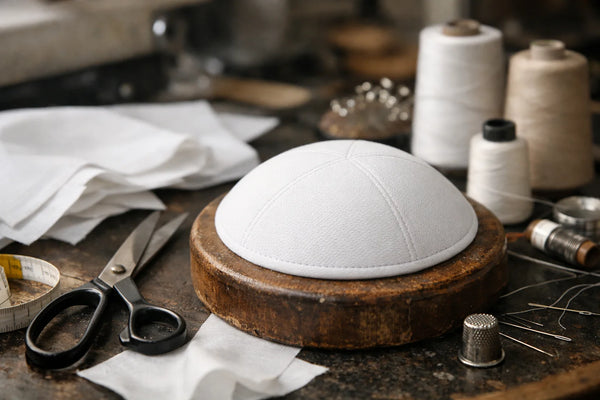
In practice, the best white yarmulke choices lean into fabric and finish: white cotton kippah for daily wear, white satin kippah for dressy events, and white linen kippah for warm-weather formality. A plain white yarmulke works when the suit or dress already carries the outfit, while a white kippah with silver trim adds just enough detail. For readers comparing options, white kippah bulk orders make sense for groups, and a custom white kippah can match a ceremony palette without looking loud.
Who wears white kippahs now
Men, boys, and women all choose them now, and women’s styles are getting more attention because modest dress isn’t one-size-fits-all. A white kippah for wedding, white kippah for groom, or white kippah for bar mitzvah tends to sell best for formal events, while an off white yarmulke feels softer next to ivory or cream. Realistically, shoppers also search white kippah High Holidays and white kippah for Yom Kippur when they want something respectful but not severe.
The blunt answer: white kippahs for sale move fast because they solve one problem well. They look dressy, they pair with almost anything, and they don’t fight the rest of the outfit.
Color, origin, and pronunciation still trip people up. Kippah, yarmulke, yamaka, and kipa all point to the same item, just from different usage patterns and pronunciation habits (the word choice says more about community than status). That’s the whole story, really.
Why white kippahs are gaining ground at weddings, bar mitzvahs, and Shabbat tables
White kippah orders are up because they read as formal, clean, and easy to match.
- They work with a black suit, brocade jacket, or simple cloth outfit, and a white yarmulke keeps the look sharp without shouting.
- For event wear, a white kippah for wedding photos feels more polished than black, while a white kippah for bar mitzvah boys keeps the focus on the family, not the headwear.
- For High Holidays, a white kippah for Yom Kippur or a white kippah High Holidays set fits the mood better than louder designs.
Fabric changes the message fast. A white cotton kippah feels casual and easy for wearing all day, while a white satin kippah reads dressier; that’s why shoppers compare a plain white yarmulke with a white linen kippah, a white knit kippah, or an off white yarmulke before they buy. A white kippah with silver trim can add just enough detail for men who want a formal finish, and an elegant white kippah often wins over beaded or patterned designs for weddings and Shabbat tables.
Custom white kippahs for events
A custom white kippah gives planners room to add names, dates, inside linings, mesh backs, or clips. That matters for a white kippah for groom, a school order, or a synagogue run where the kippah has to stay put and still look good.
And yes, bulk makes sense when 30 to 100 guests need the same look. A white kippah bulk order can cut unit cost, while white kippahs for sale as single pieces work better for backups, travel, or trying the fit first. iKIPPAHS sees the same pattern again and again: one clean style, a few smart fabric choices, no fuss.
Materials, fit, and design differences shoppers are comparing right now
What does a white kippah actually need to do? It has to wear cleanly with a suit, stay put during prayers, and not fight the rest of the outfit. That’s why shoppers keep comparing cloth, brocade, mesh, and satin before they buy.
Cotton, linen, satin, velvet, suede, — brocade don’t read the same on the head. A white cotton kippah feels plain and easy for daily wear, while a custom white kippah lets the wearer match a tie, a jacket, or a family color story. For a softer tone, an off white yarmulke looks less stark under indoor light. And yes, a white kippahs for sale page usually moves fastest before High Holidays and wedding season.
Cotton, linen, satin, velvet, suede, and brocade: which white finish wears best
A white satin kippah has shine, so it works for formal wear but can look dressy fast. A white linen kippah reads lighter and more breathable. A white knit kippah sits closer to the head and feels familiar for men and women who want less structure. For anyone asking about a plain white yarmulke, that’s still the safest move for synagogue, school events, and understated custom orders.
Flat, dome, and 6-panel shapes: how fit changes the look on your head
Flat styles look crisp. Dome shapes add height. Six-panel builds feel more tailored, especially for a white kippah for wedding, a white kippah for groom, a white kippah for bar mitzvah, a white kippah for Yom Kippur, or a white kippah High Holidays set. That shape choice changes the whole read—subtle, but not small.
The short version: it matters a lot.
Decorative details that matter: beaded trim, lace edges, silver accents, and designer touches
Details are the difference. A white kippah with silver trim feels sharper than a bare edge, while lace softens the look for women or a special ceremony. Beaded trim, designer stitching, and even one neat rim can turn an elegant white kippah into something that looks considered, not busy. For bulk orders, that matters just as much as price. So does the spelling on the tag: iKIPPAHS.
White kippah shopping trends across styles, rules, and communities
About 1 in 4 shoppers who start with a black kippah end up browsing a white kippah instead, especially for dress codes that feel softer and less severe. That shift shows up in search results too: people want a white yarmulke that still reads formal, not flimsy or costume-like. The best pages answer that fast.
Black vs white: why some shoppers want a softer alternative to the standard dark kippah
A white cotton kippah reads clean with a dark suit, while a white satin kippah gives a sharper finish for evening wear. Some shoppers prefer a plain white yarmulke; others want an elegant white kippah with a little polish, like a white kippah with silver trim. For a white kippah for wedding, the detail matters. So does fit.
From a product angle, buyers compare cloth, brocade, mesh, lace, and leather-adjacent designs before they click buy. A white linen kippah feels cooler for long wear, and a white knit kippah often feels more relaxed. A custom white kippah can solve sizing or design issues fast, especially for white kippah for groom needs or a white kippah for bar mitzvah order.
What rules and customs shape white kippah wear across Orthodox, Conservative, and modern households
The honest answer is that rules aren’t one-size-fits-all. Some households treat white kippah High Holidays wear as standard; others reserve a white kippah for Yom Kippur, while a white kippah bulk order makes sense for shul groups or events. An off white yarmulke can also feel easier for women, men, and teens who want tradition without a stark contrast.
Search behavior is blunt. Shoppers scan color, price, and occasion first. Then they look for white kippahs for sale, discount offers, and whether iKIPPAHS has the exact style. If the page doesn’t answer pronunciation, origin, wear rules, or who wears white kippah, they bounce.
Simple idea. Harder to get right than it sounds.
How to choose the best white kippah for your outfit, occasion, and budget
A groom tries on three options the week before the chuppah.
One looks too shiny, one slips, and one just works. That’s the white kippah question in real life.
For formal wear, a white yarmulke should sit quietly against the suit or tux, not fight it. A white kippah for wedding photos usually reads best in satin or cloth, while an off white yarmulke can soften a stark black jacket. For readers who prefer modest, polished styling, an elegant white kippah pairs well with light shirts, silver accessories, and simple tailoring.
Materials matter. A white cotton kippah handles daily wear, a white linen kippah breathes better in warm weather, and a white satin kippah feels dressier for ceremonies. For High Holidays, a white kippah High Holidays choice should stay secure for long services; a white kippah for Yom Kippur should also be light enough for all-day wearing. A plain white yarmulke works for people who want no fuss—same with a white knit kippah or a white kippah with silver trim, depending on the outfit.
What to check before ordering
- Size: flat, dome, or 6-panel
- Fit: clips, mesh inside, or tighter band
- Use: white kippah for bar mitzvah, white kippah for groom, or custom white kippah
- Order size: white kippah bulk for families or shuls
Before checkout, confirm the plural on the page, shipping details, and whether white kippahs for sale include enough clips. That little check saves a headache later. iKIPPAHS also helps shoppers sort styles fast.
Worth pausing on that for a second.
Frequently Asked Questions
What does a white kippah mean?
A white kippah doesn’t carry one fixed meaning. For some Jews, it reads as formal, clean, and מעט more dressed up than black velvet; for others, it’s chosen for a wedding, a holiday, or just because white works with the outfit. The meaning is usually personal, not universal.
Who wears a white kippah?
Plenty of people do — men, boys, and sometimes women who wear a kippah for prayer, family events, or community settings. A white kippah is especially common for dressy occasions, and it’s also a smart pick for anyone who wants a softer look than a black yarmulke. In practice, it’s less about rules and more about fit, fabric, and how visible you want it to be.
Does the color of a yamaka mean anything?
Sometimes, — not always. A black kippah can signal a more traditional or formal choice, while a white kippah often feels lighter and more event-ready; still, the color alone doesn’t define a person’s observance, politics, or background. If someone is trying to read too much into color, they’re usually guessing.
Is it racist to wear a yamaka?
No — wearing a kippah or yamaka isn’t racist. It’s a Jewish religious head covering, and for Jews it’s part of daily wear, prayer, and life-cycle events. The only issue is respect: treat it as a religious item, not a costume.
What fabric works best for a white kippah?
For formal wear, cloth, silk, satin, and brocade all make sense. Cotton is easier for everyday use, while mesh inside can help a kippah stay put during long wear or active moments. If the goal is a polished look, a white velvet or lined style usually looks more intentional than a flimsy fabric that collapses on the head.
It’s a small distinction with a big impact.
How do you keep a white kippah clean?
Spot-clean it as soon as possible.
White shows everything — makeup, food, sweat, and handling marks — so a gentle cleaner and a soft cloth matter more than fancy care tricks. For a child’s white kippah, a washable cloth version is usually the saner choice.
What size white kippah should be chosen for a formal outfit?
Smaller, flatter styles tend to look sharper with suits and dress shirts, while dome shapes can feel a little more traditional. If the outfit is already busy, a simple white kippah keeps things calm. If the event is a wedding or bar mitzvah, custom sizing is worth it because the wrong fit looks sloppy fast.
Is a white kippah appropriate for weddings and bar mitzvahs?
Yes, and it’s one of the safest choices for both. White works with tuxedos, dark suits, and lighter ceremony looks, which is why it shows up so often in wedding kippahs and custom event orders. A plain white style is classic; a subtle trim or textured cloth can give it a little personality without getting loud.
What’s the difference between a white kippah and a white knitted one?
A white knitted kippah feels more casual and textured, while a cloth or satin version looks dressier. Knits can be comfortable and flexible, but they don’t always read as formal. If the plan is a black-tie event, cloth usually wins.
Can women wear a white kippah?
Yes, if that matches the person’s practice and community custom. Some women wear a kippah for prayer, family celebrations, or meaningful Jewish moments, and a white one can be a subtle choice that doesn’t fight with dressy clothing. The key is comfort and context, not a rigid color rule.
The shift toward a white kippah isn’t about novelty for its own sake. It’s about fit. Formal events want a cleaner line. Shabbat tables want something quieter. And shoppers who care about modest style are done treating headwear like an afterthought.
That’s why the strongest choices right now are the ones that balance look and function: cotton or linen for easy wear, satin or velvet for dressier moments, and a shape that sits right without fuss. Flat, dome, or 6-panel — each one changes the finish in a real way. Small detail, big difference.
For anyone weighing a White kippah for a wedding, bar mitzvah, or weekly wear, the next step is simple: compare material, fit, and size before ordering, then pick the one that works with the outfit already hanging in the closet. That’s the decision that holds up once the photos are taken.


