
Greeley, CO – October 28, 2026 – PRESSADVANTAGE –
ABRA Auto Body Greeley has published consumer guidance explaining why collision damage around a vehicle’s wheel can involve more than the tire itself. The October publication focuses on wheel-area impacts and the surrounding components that may become relevant when technicians develop a collision repair plan.
The guidance addresses a specific consumer concern that can arise after curb strikes, side impacts, and other collisions concentrated around a wheel. Although tire or wheel damage may be the most visible result, the affected area also contains suspension, steering, exterior body, and mounting components. The resource explains how technicians use the location and direction of the impact to determine which of those areas require evaluation.
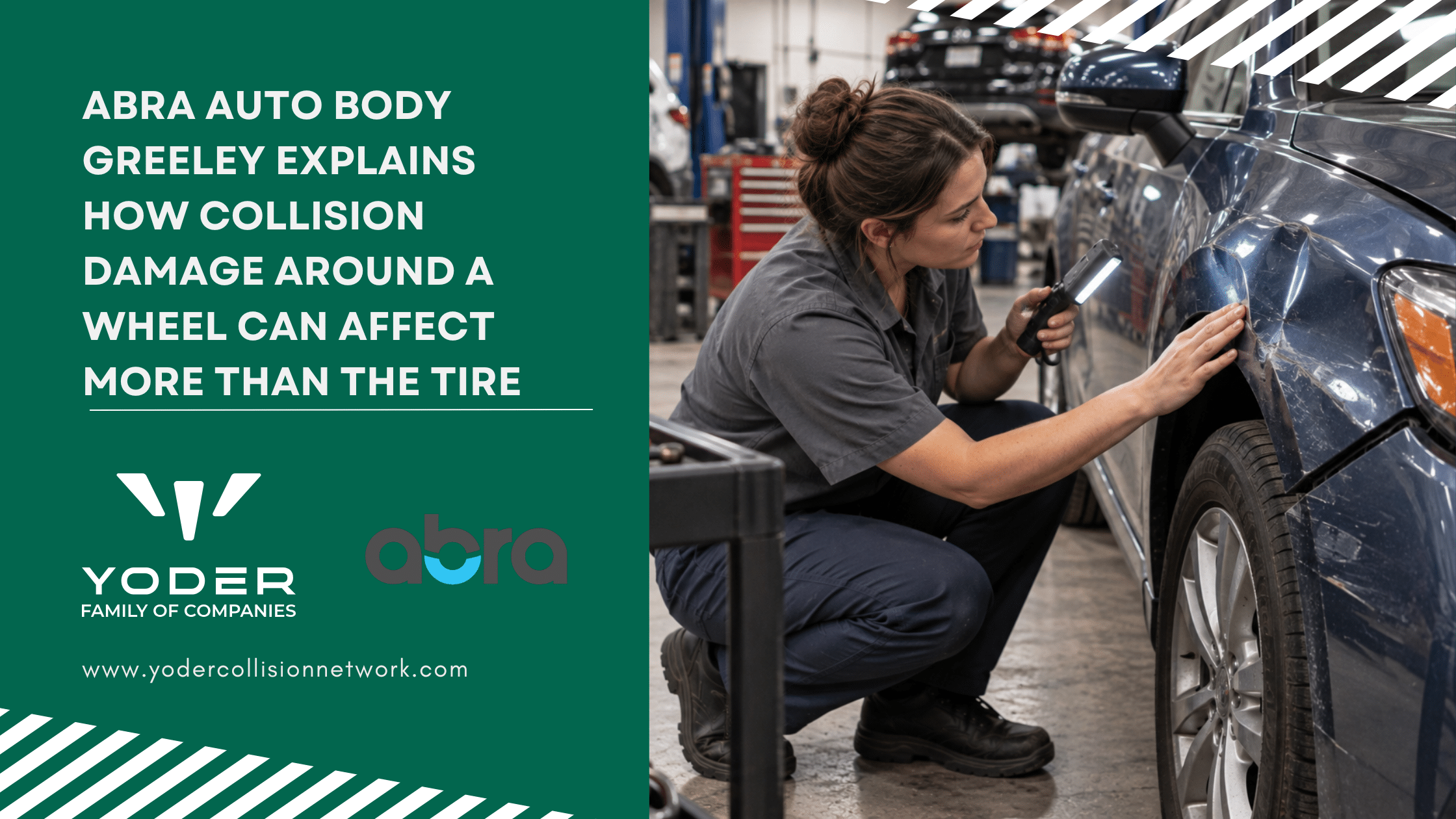
ABRA Auto Body Greeley is part of Yoder Collision Network. The new wheel-area guidance expands on the network’s broader collision repair information by concentrating on the components positioned around a wheel rather than collision damage throughout the vehicle.
The first part of the guidance addresses visible evidence. Damage may appear on the tire, wheel, fender, wheel opening, bumper corner, or other nearby exterior components. Scraping, dents, deformation, or a change in the position of a body component can help document where contact occurred.
Those observations establish an inspection starting point rather than a diagnosis of every component in the area. A damaged wheel or fender, for example, does not independently establish that suspension or steering components have also been damaged.
The second part focuses on components positioned behind and around the wheel. Depending on vehicle design, the area can contain suspension components, steering connections, mounting points, liners, shields, and other parts that are not as readily visible as the tire or exterior body panel.
When the documented impact places these components within the affected area, technicians can evaluate their condition as part of repair planning. This provides a more specific basis for determining the repair scope than assuming that damage either stops at the visible wheel or automatically extends to every nearby component.
Wheel position can provide additional information. A wheel that appears to sit differently within its opening, changes in clearance around the tire, or other observable differences can identify areas for closer evaluation. These observations still require inspection before a particular cause is established.
The third part of the October resource addresses the body components surrounding the wheel. Front fenders, quarter panels, bumper areas, wheel-opening components, and nearby lower body sections can be affected during the same collision.
Repair planning can therefore involve both mechanical and body-related areas without assuming that every wheel-area collision produces the same combination of damage. Yoder Collision Network’s auto body repair information provides additional context about evaluating and restoring damaged exterior components.
The guidance also explains why access can matter. Wheel liners, shields, trim, and adjoining components can limit visibility during an initial exterior inspection. When removal is appropriate to the repair process, technicians can examine areas that were previously covered and document their actual condition.
This distinction between potentially affected and confirmed damage is central to the October publication. The proximity of a suspension, steering, or mounting component to an impact identifies it as an area that may warrant evaluation. The inspection findings determine whether that component becomes part of the repair plan.
Vehicle construction and manufacturer procedures can further influence the evaluation. Suspension layouts, steering systems, wheel-opening construction, attachment methods, and body materials differ among makes and models. Applicable repair information can therefore help define the procedures associated with documented damage.
Yoder Collision Network provides information about manufacturer-specific repair programs through its OEM certification resource.
The October guidance gives consumers a more focused framework for understanding wheel-area collision damage. The tire and wheel represent only part of the area exposed during certain impacts. Nearby body panels, suspension and steering components, mounting areas, liners, and other components can be considered according to where and how the collision occurred.
The publication also clarifies that this broader evaluation does not mean concealed mechanical damage should be presumed. Its purpose is to explain how technicians move from the visible impact to the components physically associated with that area and document which conditions are actually present.
For consumers, that distinction helps explain why a wheel-area collision assessment may extend beyond checking the tire for visible damage. The repair scope is developed from the individual impact and documented findings rather than from a universal assumption about what a damaged wheel means for the rest of the vehicle.
ABRA Auto Body Greeley is part of Yoder Collision Network and provides collision and auto body repair services at 2835 S 31st Ave, Greeley, CO 80631. The facility provides body and structural repair, refinishing, and related collision repair services.
###
For more information about ABRA Auto Body Greeley, contact the company here:
ABRA Auto Body Greeley
Micah
970-304-0165
greeley@abraauto.com
2835 S 31st Ave, Greeley, CO 80631


